Sunday 1 May
A Letter From Jesus
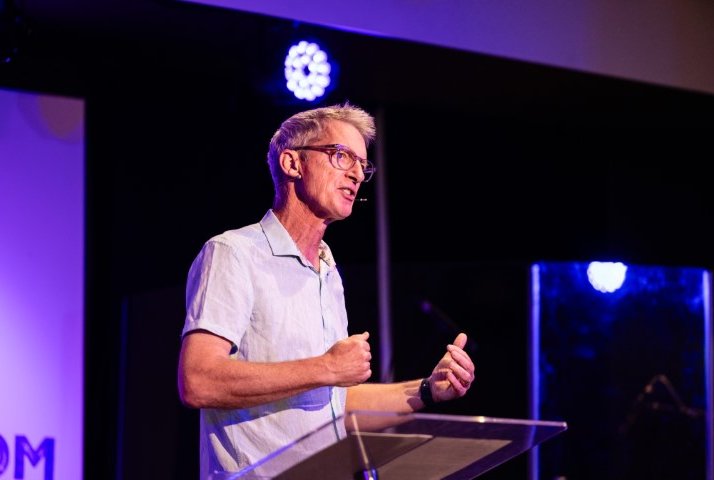
Phil Stedman
Imagine if Jesus wrote a letter to RCC, and to 6 other churches and that this letter was read out in all 7 churches. What would it feel like? This is essentially what happened in the first century. Phil walks us through Rev 3:7-22 and the letters to the churches in Philadelphia and Laodicea, focussing on the church of Laodicea as that may resonate with our church in western culture. Phil encourages us to examine our posture towards Jesus - he stands at the door of our hearts and knocks (Rev 3:20) - do we invite him in or leave him on the porch?
Life Group questions
A Letter From Jesus
Session 2: Revelation 3:7-21
Cheat Sheet
Philadelphia was a wealthy city that sat at the junction of several major trade routes in the ancient
world. It was also a part of a busy farming region, and had been subject to several major
earthquakes. Christians in Philadelphia, many of whom were also Jewish, had been expelled from
the local synagogue and ostracised by their fellow Jews.
The key of David is a phrase first found Isaiah 22:22-25, where it refers to an individual who has
the power to grant access to the king’s presence. Its re-use here refers to a different kingdom to
that which Isaiah had in view: the eternal kingdom of God.
“An open door that no one can shut” is another example of Revelation’s High Christology
(theology about Jesus). This phrase, alongside that describing Jesus as holding the key of David,
indicates that only Jesus (and no-one else) has the power to welcome people into heaven.
“The synagogue of Satan” is a phrase used twice in these letters: once in 2:9, and again in 3:9.
In both Smyrna and Philadelphia, local Jews excluded and persecuted those who had converted
to Christianity. Here this phrase is used to indicate the source of such behaviour: Satan himself. In
John 8:44, Jesus also tells a hostile and disbelieving Jewish audience that they are children of the
devil. This is harsh language, but in both places, it reveals more High Christology: it is followers of
Jesus who are children of God, while opponents of Jesus are in league with the devil.
“The hour of trial” refers to a period in which the world as a whole will be “tested” in a season of
difficulty and struggle. Scholars differ as to when and how this will occur, with some suggesting
there are various seasons in which the world experiences testing or tribulation, and others arguing
that this is a specific end-times event. Ultimately, the point in 3:10 is not about establishing a
timeline for a time or times of trial; rather, the encouragement is that Jesus will keep the church
safe during such a season. Sorry, this probably doesn’t mean he will rapture Christians away from
the world when stuff gets bad, but rather that he promises to protect and sustain his followers in a
special way during such periods.
Laodicea was a wealthy Roman city, famed for both its wool production and medical school. The
city also produced a range of popular medicines, including an eye cream. Yet Laodicea had one
major weakness: water. Drinking water for the city had to be piped in from distance and arrived
tasting bitter and lukewarm. The pipes were also a tempting target for any armies that wanted to
attack the city. The church in Laodicea is mentioned multiple times in the New Testament: both
here, and five times in Paul’s letter to the Colossians. There, Paul mentions a letter that he wrote
to the church, which has since been lost, and also a missionary, Epaphras, who was sent there.
Hot, cold, and lukewarm are references to different sources of water that the Laodicean church
would have been aware of. Six miles north of the city were a set of famous hot springs. Elsewhere,
mountain streams provided cold water that was refreshing on a hot day. Yet all the Laodiceans
could drink in their city was lukewarm, bitter water that had been piped in. In this context, both
“hot” and “cold” are good things, for different reasons, while “lukewarm” is considered undrinkable
and inferior.
“Gold refined in the fire” is an image of both purity and resilience. The prophet Malachi uses a
similar image when describing the coming of the Lord in Malachi 3:2-3. In both places, the idea is
that the refining process drives out contaminants and weaknesses in the metal, making it pure. Yet
it is also possible that in Revelation, Jesus has the image of persecution and testing in view when
he is talking about fire. One can gain the gold that comes from engagement in worldly commerce,
or that which comes through endurance and faithful witness in the face of opposition.
Read Revelation 3:7-21
Watch Craig Keener’s video on Revelation 3, from 7:30 through to 14:50.
At the beginning of this section of video, Keener notes that “the only unconditionally praised
churches were these persecuted ones.” Why do you think this is?
Later, Keener shows us how Revelation 3:7-8 demonstrates that “Jesus is the one who
determines who really belongs to his people, and who doesn’t.” What do you think of this idea?
How does it impact the way we understand faith, and church?
Keener then reminds us “what is big in God’s sight is very different from what’s big in the world’s
sight. We may think we are small, we may think we are weak, but we are ambassadors for God’s
kingdom. We are the forerunners of the future age. And so we don’t need to pity ourselves as if we
are so weak, but we can remember who we are in Christ, and that God gives us the strength to
carry on.” What do you think of this idea?
How do you feel, thinking of yourself as an ambassador for God’s kingdom and a
forerunner of the future age?
Finally, Keener talks about the phrase “keep from” that is used in Revelation 3:10. Keener
suggests that this phrase is about Jesus protecting the church during a time of trial, rather than
taking them out completely (the idea of the rapture, promoted in some Christian circles.)
What do you think of Keener’s argument here?
How might the desire to avoid suffering completely end up being counter-Christian?
Watch Craig Keener’s video on Revelation 3, from 18:10 through to the end.
In the first few minutes of this video, Keener spends significant time describing the financial and
cultural wealth that was present in the city of Laodicea. How had this broader cultural attitude
affected the church there?
Why are these attitudes a problem for practising Christian faith?
Later, Keener notes that all of the things the Laodiceans could boast about were “empty boasts.”
While they may have been proud of their wealth and self-sufficiency, these were the very things
that Jesus saw as a problem.
What kinds of things might we take pride in, that Jesus would condemn?
What things might Jesus be calling churches in New Zealand to give up or condemn?
Close with a time of honest confession. How have you become too self-sufficient? What is Jesus
calling you to repent of?
Optional Extra Resources:
- Search online for a picture of the painting “Light of the World” by William Holman Hunt. The painting is an attempt to depict Jesus’ words in Revelation 3:20. Yet William Holman Hunt, and other artists, often describe the door as representing the heart of the individual believer.
Read Revelation 3:14-20 again. What else could the door represent? And what do you make of Hunt’s painting?
Past talks